

Concrete and Brick Take-off for Nepali Brick Sizes
Estimating construction materials accurately saves money and prevents delays. In Nepal it is trickier than the textbooks suggest, because local brick sizes differ from the international standard ones the worked examples use.
Understanding Nepali brick sizes
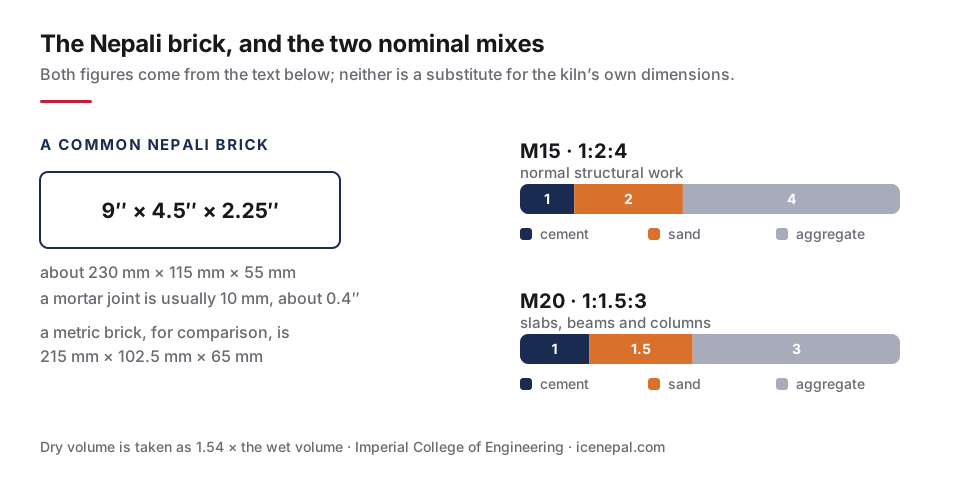
International textbooks use standard metric bricks, around 215 × 102.5 × 65 mm. Bricks manufactured in Nepal generally follow different dimensions: a common size is 9″ × 4.5″ × 2.25″, roughly 230 mm × 115 mm × 55 mm, though this varies by kiln and by region.
Four things decide whether a brick take-off comes out right.
- Account for the mortar jointUsually 10 mm, about 0.4 inches
- Decide the wall thickness firstA 4.5″ single-brick wall and a 9″ double-brick wall need very different counts per square foot
- Take dry volume as 1.54 × wet volumeIt covers the voids between the dry materials
- Confirm the brick with the kilnSizes vary by kiln and by region, and the estimate follows the brick you actually buy
Concrete mix design basics
For concrete works — pillars, slabs, footings — the volume is calculated in cubic metres or cubic feet. The dry volume of concrete is usually taken as 1.54 times the wet volume, to account for the voids between the dry materials.
The two common nominal mixes in Nepal are M15 at 1:2:4, one part cement to two parts sand to four parts aggregate, used for normal structural work; and M20 at 1:1.5:3, used for slabs, beams and columns that need higher strength. To estimate the materials you find the total volume, convert it to dry volume, and then divide it in the mix ratio.
Use the concrete and masonry calculator
Working out the exact number of bags of cement, cubic feet of sand and number of local bricks by hand is tedious and easy to get wrong. The calculator on this site handles it, using the standard Nepali brick size and the standard mix ratios above.
Last reviewed by Imperial College of Engineering. Every figure on this page is cited to the document it came from.