
Fehmarnbelt immersed tunnel nears its first kilometre
A fourth 217 m, 73,500-tonne element was sunk into place, bringing about 900 m of the 18 km Denmark-Germany tunnel into position.
Femern A/S, the Danish company building the Fehmarnbelt tunnel between Denmark and Germany, said on 28 September 2026 that a fourth tunnel element had been sunk into place on the seabed. Each standard element is 217 m long and weighs more than 73,500 tonnes. Nearly 900 m of the 18 km tunnel is now in position.
- 18 kmlength of the finished tunnel, the longest immersed tunnel
- 89elements in total, 79 standard and 10 special
- 4,500 tof ballast concrete added to sink the first element
- 7 minplanned crossing time by train, 10 minutes by car
- 2031earliest likely opening, up from the original 2029
What happened
The fourth element, named after the Danish town of Nykøbing Falster, was immersed in a trench in the seabed south of the island of Lolland. It was joined to the three elements already in place. Together they make up the first nearly 900 metres of the tunnel. Femern says the next element will be the first special element, a different type of unit that it compares in size to a four-storey building.
The elements are made in a tunnel factory at Rødbyhavn, on Lolland. When one is ready, it is moved from the work harbour to the immersion site by tugboats and a special vessel called IVY. It is then lowered into the trench, positioned very precisely, and connected to the finished part of the tunnel. Lasse Vester of Sund & Bælt, the Danish state company behind the project, said the work showed that the equipment, method and cooperation function in practice.
The first element went down in May 2026. Railway Gazette reported that it left Rødbyhavn on 4 May and reached its final position on the seabed on 7 May, about 14 hours after lowering began. Contractors added 4,500 tonnes of ballast concrete inside so that it would be heavy enough to sink. By the end of September, Femern said 16 standard and 3 special elements had been cast.
The project is behind its original plan. The tunnel was first due to open in 2029. According to Railway Gazette, Danish project officials said in January 2026 that it would probably not open before 2031, because approval of the immersion equipment had been delayed. A new overall schedule is expected once the first elements are in place.
The engineering behind it
An immersed tunnel is built in a different way from a bored tunnel. Instead of digging through rock or soil, engineers first dredge a trench in the seabed. They build the tunnel as large concrete boxes in a dry factory, then float the boxes out and sink them into the trench one by one. After each element is placed and joined, it is covered so it stays protected and stable. This is the general method used for immersed tunnels around the world.
Buoyancy is at the centre of the method. A hollow concrete box with sealed ends contains a lot of air, so it can float even though it weighs tens of thousands of tonnes. To sink it in a controlled way, engineers add weight, often with water tanks or ballast concrete. On the Fehmarnbelt elements, temporary water chambers inside one railway tube help keep each element level. The IVY vessel uses 66 winches and about 23 km of steel cable to lower the elements to depths of about 40 m.
Each standard element is a single structure with four main tubes and a service tube. Two tubes carry a motorway with two lanes in each direction, and two carry electrified railway tracks. Railway Gazette reported that the elements are longer, wider and heavier than those used for the earlier Øresund link between Denmark and Sweden, and that they are placed in much deeper water. Positioning must be accurate to within a few millimetres.
Every 2 km or so, a special element with a basement replaces the standard design. The basements hold the tunnel's technical equipment. At road level, each special element has a lay-by where a service vehicle can stop without blocking the motorway. In total the tunnel will have 79 standard elements and 10 special elements, 89 in all.
What it means in Nepal
Nepal has no sea, and the sources do not mention Nepal, so this section is about the engineering ideas rather than any Nepali project. The first idea is factory production. By casting every element in the same factory, under cover, the builders can control the concrete, the reinforcement and the curing far better than on an open site. The same thinking is behind precast bridge girders, box culverts and building panels on many land projects.
The second idea is that heavy structures can be moved and placed with great precision if they are planned carefully. Lifting, floating and lowering a 73,500-tonne element needs calculations of weight, stability and forces in the cables, and close monitoring during the operation. These are the same principles, at a much larger scale, that engineers use when lifting precast beams onto piers or placing large gates in a dam or barrage.
The third idea is that schedules depend on equipment and approvals as well as on construction. On this project, the expected opening has moved from 2029 to about 2031, and project officials linked the delay to the immersion equipment. Sund & Bælt has said a new overall schedule will follow once the first elements are down. Planning for such risks, and explaining them honestly to the owner and the public, is part of managing any large project.
What to study if this interests you
Fluid Mechanics, ENCE 201, in the third semester of BCE, covers hydrostatic pressure, buoyancy and the stability of floating bodies, which explain how a concrete element floats and sinks. Design of RCC Structures, ENCE 352, in the sixth semester, covers the design of reinforced concrete members like the walls and slabs of a tunnel box. Project and Construction Engineering, ENCE 402, in the seventh semester, covers planning, scheduling and risk, including the kind of delay this project faced.
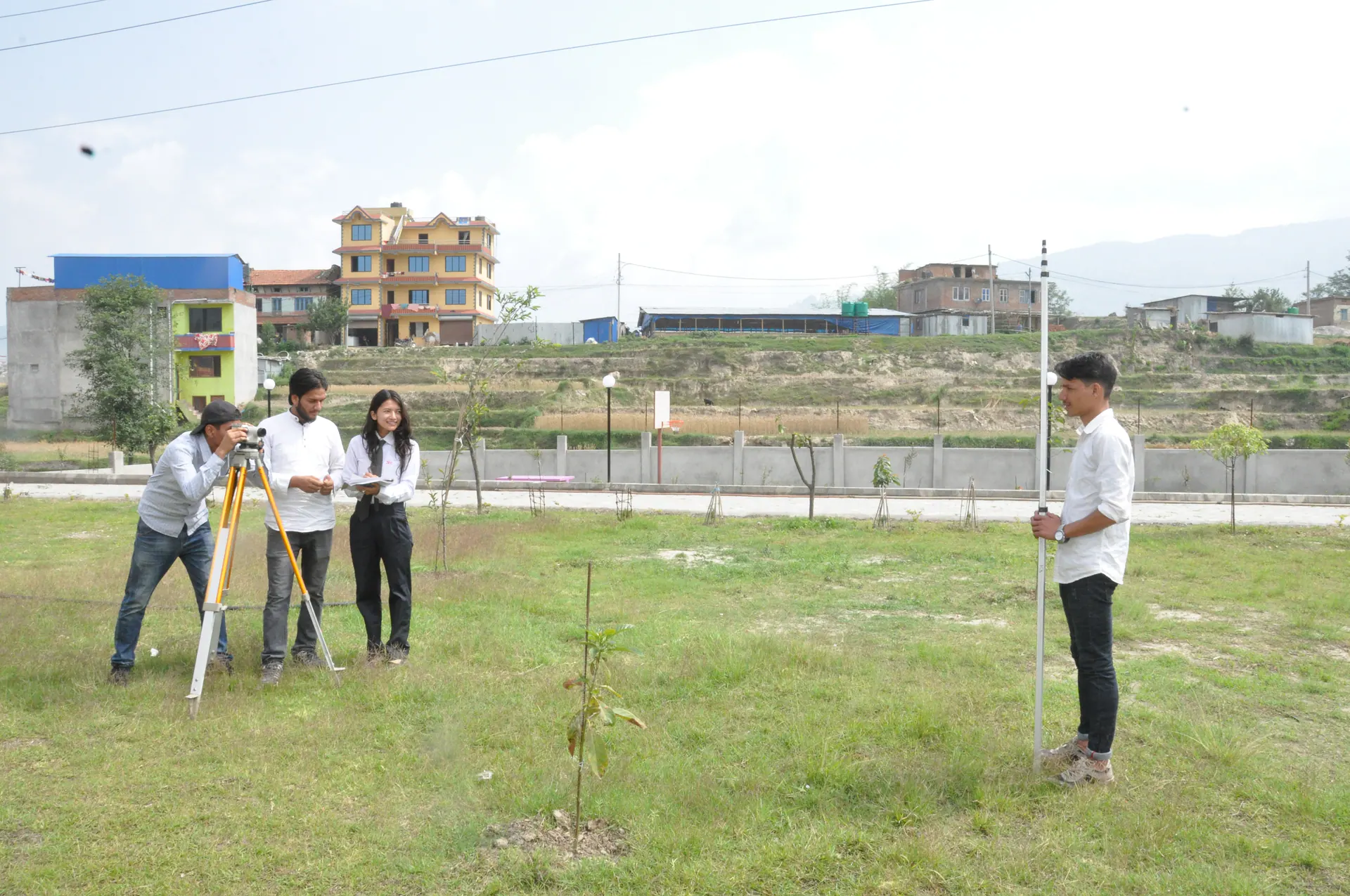
Placing an element to within a few millimetres also depends on accurate measurement. Engineering Survey II, ENCE 203, in the third semester, covers the precise surveying methods and instruments used to set out and check the position of large structures. Such measurements are needed on any site where a precast part must meet a structure that is already built.
Words in this story
- Immersed tunnel
- A tunnel made of large precast sections that are floated into place and sunk into a trench on the bed of a sea or river.
- Ballast
- Extra weight added to a floating object so that it sinks or stays stable.
- Buoyancy
- The upward force water exerts on an object, equal to the weight of the water the object pushes aside.
Where this comes from
- Femern A/S, 28 Sep 2026
- Railway Gazette International, 7 May 2026
The news itself rests on one source; any other link is background or from the same publisher. Written in our own words; no sentence is copied from these reports. Researched with AI assistance on 11 October 2026; no member of faculty has reviewed it yet. If you spot a mistake, call 01-5091616 and we will correct it and say so.