

Can students reach the examination hall on the revised dates?
Students across the flood-affected districts are asking that question in public, and it has a checkable answer that nobody had published. So we checked it. The routine has now been revised twice. Below is what the three IOE routines say when you read them against each other, and what the highways between those students and their examination centres allow as of . This page states what the documents say. It asks the Institute of Engineering for nothing and it predicts nothing.
What the three routines say
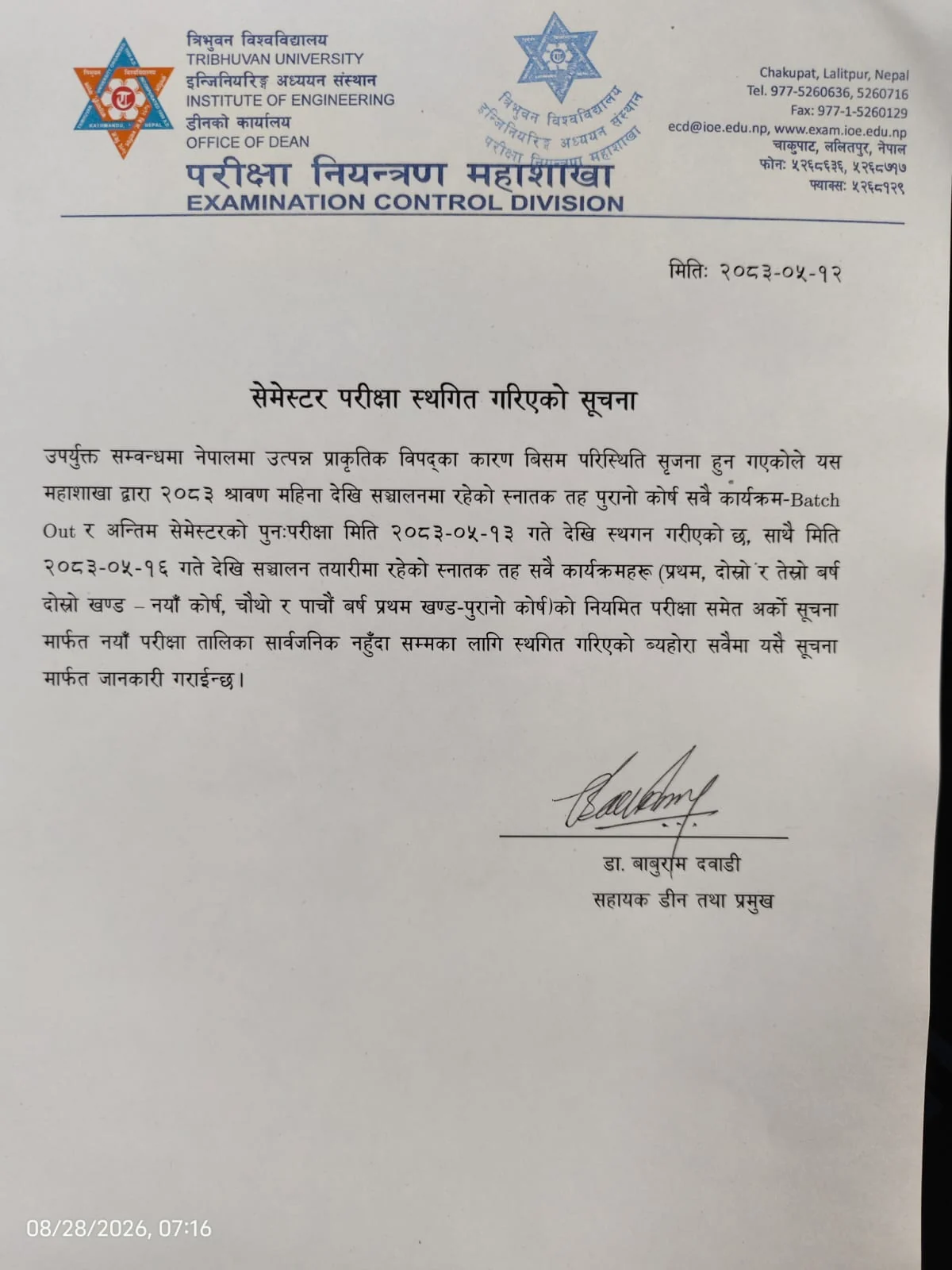
The regular Bhadra routine was published on 31 July 2026 as notice 14154. Every Bachelor semester examination was postponed on 28 August 2026 by notice 14898, which names the disaster as the reason. A revised routine followed on 31 August 2026 as notice 14940. A second revision followed that one on 2 September 2026, as notice 15041, alongside notice 15040, which announces it. All three routines are scanned tables, so the dates below were read off the rendered pages of each PDF rather than off a portal listing.
The notice gives no reason beyond further discussion with stakeholders. Techpana reported the same evening that the dates moved after students objected to the previous ones, fourth-year students in particular, on the grounds that the time left to prepare was too short.

| Year and part | Original | First revision | Now | Moved by |
|---|---|---|---|---|
| Second year II partNew course | 2 September | 9 September | 13 September | 11 days |
| Fourth year I partOld course | 4 September | 7 September | 14 September | 10 days |
| Third year II partNew course | 3 September | 10 September | 15 September | 12 days |
| First year II partNew course | 1 September | 8 September | 16 September | 15 days |
Two things fall out of that table. The first is that the shift is not one number: counted from the original routine it is 10 days for one group and 15 for another, so a student reading a figure from a group chat is quite likely reading somebody else's. The second revision alone added between 4 and 8 days on top of the first.
The second is the order, which has now changed twice. In the original routine these four groups sat on consecutive days, first year first and fourth year last. In the first revision the fourth year went first. In the current one second year II part goes first and first year II part goes last, which is the reverse of where the two of them started. The group that sits earliest has 11 days between the current routine being published and its first paper.
You do not have to take that on trust. These are the same region of the same table in each of the three routines, one above the other. The column headings match, the subject codes match, and the date in the first row is the only thing that has changed.




Back-paper and batch-out examinations are not in that table on purpose. They were postponed from a different date, they start at 7:00 am rather than 1:00 pm, and putting them in the same column as the regular papers would compare two different things. There is a second reason now: notice 15040 moves only the BE and BAR regular papers and leaves the back and batch-out papers on the routine of 31 August 2026. That earlier routine has not been superseded whole, and for those papers it is still the document to read.
What the roads allow
These are the routes candidates from outside the Kathmandu Valley would have to travel on. The status of each was read off the sources named on our emergency helplines and flood page on , and roads in this condition change within a day. Why the Prithvi keeps failing at the same slope is in our report on why no warning came in the Rasuwa flood, and the Krishnabhir landslide.
- Prithvi HighwayOne way at Galaundi near Gajuri, where the road subsided on 9 October; the Department of Roads planned two-way traffic from 6 pm on 11 October
At about 5 pm on 9 October the road subsided at Galaundi, Gajuri-5, Dhading, on the Kathmandu side of Gajuri. Nearly 100 metres cracked and 20 metres collapsed, and the Department of Roads blames the Trishuli cutting under the road since the 26 August flood. Nepal Police listed it fully blocked on the morning of 10 October. Crews cut about 160 metres into the hillside, and the Department of Roads said it would run traffic one way from 9 pm on 10 October, widen the road from 7 am on 11 October with short stops, and open both directions by 6 pm on 11 October if the weather held. By 9:45 am on 11 October we had found no report that two-way traffic had started. The Department asked people not to travel unless they have to. Krishnabhir, Chalise and the other slopes named after the September rain are still the weak points. This is the road anyone coming from Pokhara, Chitwan or Butwal travels on, so please ring Traffic Police on 103 on the morning you set out, and expect queues in Dashain.
- Kanti Lokpath (Kathmandu to Hetauda)Carrying the small vehicles turned away from the Prithvi on 10 October; not on the police list of that morning
Nepalnews reported a landslide blocking the Kanti road at Takurche, Bagmati Rural Municipality-3, Lalitpur, on 2 October. On the evening of 10 October the Kathmandu Post reported small vehicles being sent along the Kanti road and the Tribhuvan Rajpath while the Prithvi was shut, and Nepalnews reported it so busy that vehicles were held at the New Bus Park in Gongabu. It is not on Nepal Police’s list of obstructed roads of 10 October. Expect it to be slow. The Balkhu, Kulekhani, Bhimphedi and Hetauda road was reported open by the Department of Roads on 29 September and we have found nothing newer.
- Mahendra Highway (Chitwan section)No report on the Chitwan section after the closure of 26 September; not on the police lists of 7, 8 and 10 October
The Chitwan administration stopped travel on the Mahendra and Prithvi highways on 26 September (Kathmandu Post). We have not found a report that the Chitwan order was lifted, and the Chitwan section is not on Nepal Police’s lists of obstructed roads of 7, 8 and 10 October. West of Narayangadh, the old iron span of the Lokaha bridge between Pragatinagar and Kawasoti sagged on the evening of 10 October, and the Bharatpur road office said traffic was running normally on the new bridge beside it (OnlineKhabar). The 8 October police list named a section much further west, one way at Chorkhola and Bankasbas in Shivaraj Municipality-1. Ask 103 before you set out.
- BP Highway (Kavrepalanchok)Blocked by a mudflow at Pinthali on the morning of 10 October and reported reopened later that day, in one report that gives no hour
The flooded Roshi blocked the Bhakundebesi to Mangaltar section at eight places and stopped traffic for five days. Vehicles began using a permanent track still under construction at around 10 am on 29 September, and the Kathmandu Post reported on 1 October that two-way traffic had resumed that Tuesday. On the morning of 10 October Nepal Police listed it fully blocked again, by mud and flood water at Pinthali, Roshi Rural Municipality-9, Kavrepalanchok. A news item reposted that day said it had reopened, without an hour or whether both directions run. It has now closed twice in two weeks. This is the road into the Valley from the east and from Sindhuli, so please ring 103 before you take it.
- Tribhuvan HighwayOne way at Khatripauwa, Dhunibesi-9 (police, 8 and 10 October); the Makwanpur stretch runs one direction at a time in set hours
Nepal Police’s list of obstructed roads published on the morning of 8 October says the Tribhuvan Rajpath runs one way only at Khatripauwa, Dhunibesi Municipality-9, after a landslide. It gives no hour. On 25 September the traffic police had reported one-way traffic near Nagdhunga and Pataleban (OnlineKhabar); the 8 October list does not mention those places. The list of 10 October still has it one way there. Further south, the Makwanpur administration set the hours (Ratopati, 10 October): on 11 October Hetauda to Kathmandu from 4 to 10 am and Kathmandu to Hetauda from 2 to 7 pm, passenger vehicles up to 11 metres only. Ratopati reported more than a hundred buses held for up to 36 hours between Palung and Hetauda. This is the western entry into the Kathmandu Valley, so allow extra time if you come in from Naubise or the Prithvi Highway.
- Rasuwa highways (Trishuli to Rasuwagadhi)Fully blocked (police, 7 and 10 October); a Bailey bridge at Betrawati was about half installed on 8 October
Nepal Police’s list of 7 October says every main highway in Rasuwa stays fully blocked until further notice, and the list of 10 October still has them fully blocked. A track cut by the Nepali Army and the Department of Roads reached Betrawati on 30 September (Ratopati). eAarthik reported on 8 October that about half of the Bailey bridge there was installed and that the authorities plan to run Nuwakot to Rasuwa traffic over it within the coming Sunday; that is a plan, not an opening. A 76-metre Bailey bridge is planned at Syaphrubesi. The Friendship Bridge at Rasuwagadhi went in the flood and Kerung stays closed. Across the whole reach, 69 kilometres of road and 33 of 37 affected motorable bridges were destroyed (NDRRMA, to 3 October).
- Araniko Highway and the Tatopani crossingThe Nepali road has reopened, the minister said on 6 October; China keeps the Tatopani crossing suspended
Infrastructure Development Minister Sunil Lamsal told a parliamentary committee on Tuesday 6 October that the road on the Nepal side had already been reopened, and that the Chinese side did not yet appear ready to resume operations at Tatopani (PTI). On 30 September the Charikot road office had said the Nepali side ran one way during the monsoon. Anything going north through Tatopani should be treated as stopped.
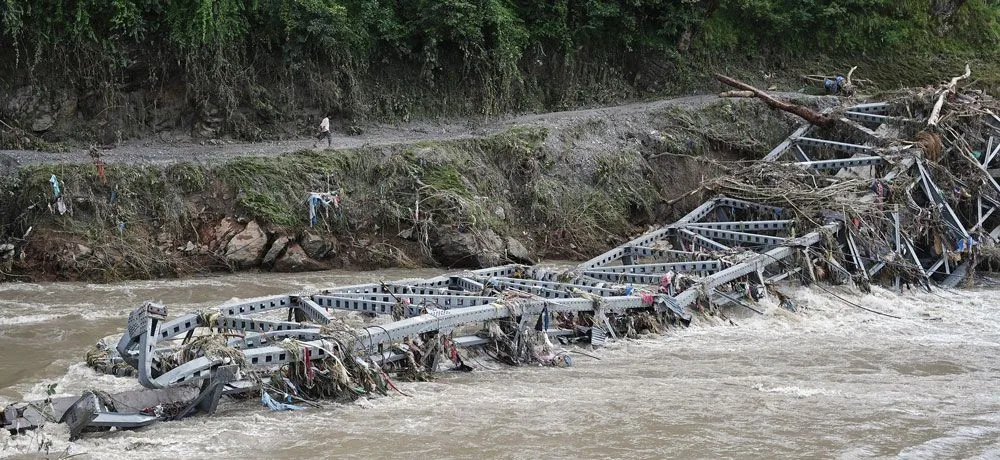
Nepal Traffic Police on 103 hold the current position on any of these, and it is worth a call before setting out rather than after. 33 motorable bridges were completely destroyed along this river system, by the count of 30 September 2026, so a route that is open at one end is not necessarily open along its length.
The other thing due that week, which also needs a campus
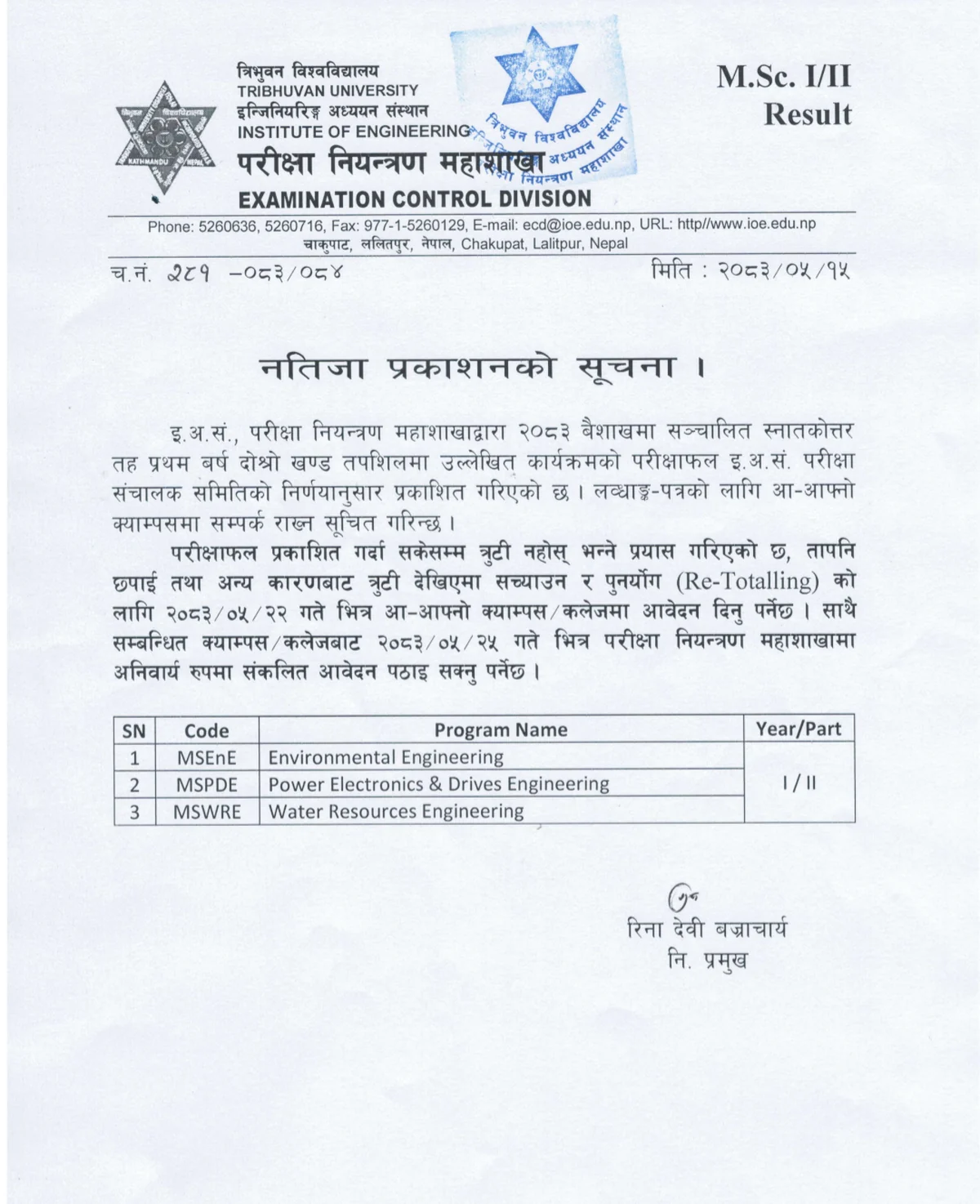
IOE published three results on the evening of 31 August 2026, notices 14962, 14963, 14964, and all three carried the same re-totalling clock. The application had to be at your own campus by 7 September, and the campus then had to reach the Examination Control Division by 10 September. Both dates have passed, so if yours went in, ask your examination section whether it was forwarded.
That clock did not move when the routine did, and it ran out. A second one opened behind it: IOE published two more results on the evening of 7 September, notices15160 and 15161, and their applications were due atyour own campus by 14 September and at the Examination Control Division by 17 September. Both dates have passed. The problem attached to it was the same one: re-totalling is a thing you do at a campus, on the same roads, and its deadline was the one that came out of the shortest notice.
If the flood itself keeps you from a paper
One arrangement was written for exactly that. On 3 September Tribhuvan University's Registrar (notice 15099) said examinees the flood hit directly, admitted to hospital, bereaved and performing the last rites, or left without a home, who are absent even from a revised-routine paper get a separate sitting on par with the regular examination, within the second week of Ashwin, 24 to 30 September, at centres the Dean's office names, on certified documents.
On 8 September IOE's Examination Control Division added the paperwork, in notice 15170, and it carried two dates. Applications went to your own campus or college by 15 September, with your certified documents, a copy of the admit card you were given, and a list of the papers you missed. Every campus then had to have the collected applications at the Examination Control Division by 17 September. Both deadlines have passed. The first one fell two days after the regular papers began on 13 September, which left anyone the flood kept from a paper days rather than weeks to file.
On 23 September IOE published the timetable itself, notice 15539, and it does not use that week. Five papers, 2 to 9 October, every one at 1:00 pm, every one at Pulchowk Campus: Engineering Mathematics I (I/I) on 2 October, Applied Mechanics (Dynamics) (II/I) on 4 October, Numerical Methods (III/I) on 6 October, Design of RCC Structures (IV/I) on 8 October, Electrical Drives (III/II) on 9 October. The first paper is 8 days after the week of 24 to 30 September began, and the notice gives no reason. The card on our notice board carries all three notices. If you filed and your paper is not among the five, call us on 01-5091616 before 2 October and we will find out where it stands.
The questions students are asking
These are restated in our own words rather than quoted. They come from posts written by named students on their own accounts, and a college that reprints one of those has put a student's name into an argument they did not choose to have here. Every question below is answerable with a fact, which is why it is worth publishing.
- Is the road between my district and the examination centre open today?
- Two of the highways that carry candidates into the Valley are not passable, and one of them no longer exists as a road. The current status of each is below, with the date it was checked.
- How many days am I actually being given?
- The answer is different for every year and part, and it has changed twice. Counted from the original routine, the papers have now moved by 10 days for one group and 15 for another. The table above gives the figure for each one, read off all three routines.
- Is public transport running on the route I would have to take?
- Services on the Muglin–Narayangadh stretch have been starting and stopping all week on flood risk. Traffic Police on 103 hold the current position, and it changes within a day.
- If I cannot reach the hall, what happens to my paper?
- None of the four notices says. The routine sets dates and the rules printed on it; it does not describe a route for a candidate who cannot travel.
- Who decides, and who do I write to?
- The routine is set centrally by the Examination Control Division at Chakupat, not by a campus. A campus can pass a case up; it cannot move a date.
- Will the routine change again?
- Nobody outside IOE can answer this, and this page does not guess. What can be said is that it has changed twice already, on 2083-05-15 and again on 2083-05-17. The routine itself says a campus must tell students at least one day before a paper, including if it is revised again, so the instruction is to keep checking the source rather than to plan on either answer.
What this page is not
- This is not an official notice, and nothing here changes a date. IOE publishes the routine and it is the only authority on it.
- No prediction that the dates will move again, in either direction.
- No student is named, quoted or screenshotted.
- No claim about what IOE intended. The comparison states what the two documents say and stops there.
The official cards for the postponement and the resumption, written as notices, are on our notice board, and the routine itself is the only document that governs your own paper. Read your own row in it rather than a date going around a group chat.
Read the source documents
- BE/BAR Routine Regular — 2083 BhadraNotice 14154, 31 July 2026
- Notice regarding the postponement of semester examinationsNotice 14898, 28 August 2026
- Notice regarding the resumption of semester examinationsNotice 14939, 31 August 2026
- BE/BAR Routine (Revised)Notice 14940, 31 August 2026
- Urgent notice regarding the rescheduling of regular semester examinationsNotice 15040, 2 September 2026
- BE/BAR Regular Routine — 2083 Bhadra (Second Revised)Notice 15041, 2 September 2026
If you are a student here and you need to talk to someone about your own paper, the college examination section is on 01-5091616. That is the same number our notice board already carries, and this page adds nothing to it.
Last reviewed by Imperial College of Engineering. Every date here was read off the IOE routine PDF that carries it, and every AD date is derived from the BS one rather than converted by hand.