
India expects 45 to 50 GWh of grid batteries within two years
India's grid battery storage jumps from about 1 GWh to a planned 45 to 50 GWh by 2028, though rising cell prices put some projects at risk.
India had only about 1 GWh of battery storage linked to renewable power in the year to March 2026, but 45 to 50 GWh is expected to be commissioned over the next two financial years, ratings agency Crisil said on 28 September 2026. Mercom India Research separately reported that India installed 8.2 GWh in the first half of 2026.
- 1 GWhIndia's renewable-linked battery storage in the year to March 2026
- 8.2 GWhbattery storage India installed in the first half of 2026
- 40%share of auctioned renewable capacity that included batteries
- 12 GWhunder construction that may earn weak returns, says Crisil
- 100-150 MWhof battery storage planned for Nepal's substations
What happened
Crisil Ratings studied projects awarded between the financial years 2024 and 2026, covering nearly 100 renewable energy developers. It found that India's battery energy storage linked to renewable power was about 1 GWh at the end of the 2026 financial year, which ended in March. Projects totalling 50 to 55 GWh are scheduled for the 2027 and 2028 financial years, and Crisil expects 45 to 50 GWh of that to be commissioned in time.
Most of this capacity came from government auctions. About 40 GWh was awarded through auctions where state electricity distribution companies are the buyers. The remaining 10 to 15 GWh is expected to serve commercial and industrial customers directly or to sell into the open power market. Projects with batteries made up nearly 40 percent of all renewable capacity auctioned in the 2026 financial year, up from about 5 percent in the two years before.
Crisil also warned about risks. Battery prices fell steadily through 2025 but rose again in 2026. Developers usually buy batteries about a year after winning a bid, so many projects awarded in 2025 now face higher costs than they planned for. Crisil says about 21 percent of storage capacity under construction, roughly 12 GWh, may earn weak returns and could be delayed. It also notes that the sector depends heavily on imported batteries and components.
Installation is already moving fast. Mercom India Research reported on 11 September 2026 that India added 8.2 GWh of battery storage in the first half of 2026. That is about 84 times the 98.4 MWh installed in the same period of 2025. Mercom's daily news summary also listed new tenders, including a 125 MW, 500 MWh standalone battery project in Bihar and a pilot sodium-ion battery system for the power company NTPC.
The engineering behind it
Crisil explains the basic reason for the batteries. In India, electricity demand peaks in the evening, when solar output is close to zero. Batteries can store surplus solar power from the middle of the day and release it during those evening hours. Renewables already make up about 39 percent of India's installed generating capacity but only about 15 percent of the energy generated, so shifting solar power in time is a large opportunity.
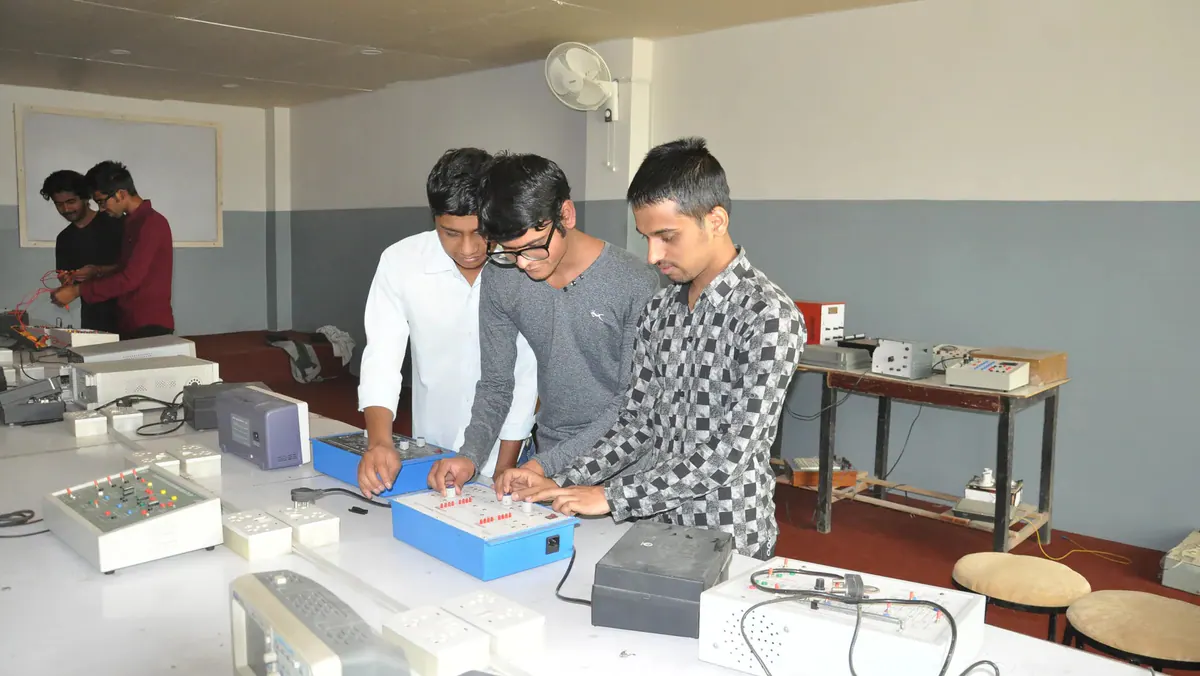
A grid battery is more than a set of cells. Batteries store direct current, while the grid runs on alternating current. A power conversion system, built from large inverters, converts between the two in both directions. A battery management system watches cell voltages and temperatures. A control system decides when to charge and discharge, following signals from the grid operator. Transformers, switchgear and protection relays connect the whole system safely to the network.
Batteries are also useful for grid stability, not only for shifting energy. Inverter-based systems can respond within fractions of a second to a sudden change in frequency or voltage, much faster than a large generator. Engineers program this behaviour through control settings that must follow the grid code, the technical rules every connected plant must obey. Getting these settings right is careful work that combines power electronics, control theory and testing.
Energy and power are two different ratings. Megawatts tell you how fast a battery can deliver power. Megawatt-hours tell you how much energy it holds. The Bihar tender for 125 MW and 500 MWh describes a battery that can deliver its full power for about four hours. Choosing this ratio is an engineering and economic decision that depends on how long the evening peak lasts and what the battery will be paid for.
What it means in Nepal
Nepal is starting on the same path at a smaller scale. The Kathmandu Post reported on 1 October 2026 that the Asian Development Bank (ADB) signed two agreements with the Nepal Electricity Authority to bring private investment into power projects. One covers the design, financing, installation and operation of 100 to 150 MWh of utility-scale battery storage at selected substations, built at several sites as a public-private partnership.
According to the Post, the batteries are meant to ease peak-period limits on the grid, help connect variable renewable power and provide grid support services. The second agreement covers a 400 kV transmission line of about 134 km along the Tingla to New Khimti to Dhalkebar corridor. The two projects together are expected to attract more than $200 million of private investment. ADB's role is to help with feasibility studies, contracts, procurement and training.
India's experience shows what engineers working on such projects need to think about. Crisil's warning about battery prices and returns shows that the financial plan matters as much as the hardware. Its point about imported components shows the risk of a supply chain far away. For students, the useful skills are in inverter control, protection, grid codes and the cost analysis that decides whether a project should be built at all.
What to study if this interests you
For BEI students, Advanced Electronics, ENEX 202, in the third semester, includes power electronics and switched-mode supplies, the basis of the inverters in a grid battery. Control System, ENEE 204, also in the third semester, covers stability, frequency response and feedback, which are the tools behind a battery's fast response to grid disturbances.
For BCE students, Engineering Economics, ENCE 307, in the fifth semester, teaches cost analysis, the time value of money and risk analysis. These are the methods behind Crisil's warning that some projects may fall short of their target rate of return. Learning to build a simple cash flow model for a storage project is a useful exercise for any engineer.
Words in this story
- Battery energy storage system
- A grid-connected set of batteries with inverters and controls that stores electricity and releases it when needed.
- Megawatt-hour
- A unit of energy equal to one megawatt delivered for one hour.
- Grid code
- The technical rules that any power plant or battery must follow to connect to and operate on the grid.
- Internal rate of return
- The yearly percentage return a project is expected to earn on the money invested in it.
Where this comes from
- Crisil Ratings, 28 Sep 2026
- Mercom India, 11 Sep 2026
- The Kathmandu Post, 1 Oct 2026
Written in our own words; no sentence is copied from these reports. Researched with AI assistance on 11 October 2026; no member of faculty has reviewed it yet. If you spot a mistake, call 01-5091616 and we will correct it and say so.